
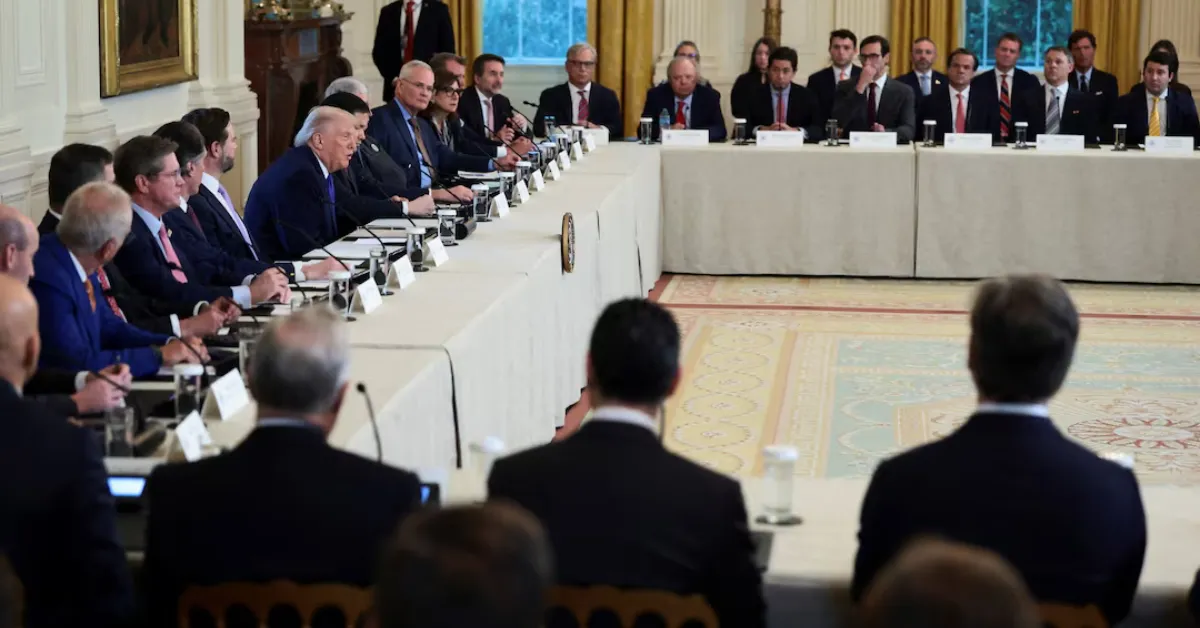
In a high-profile meeting at the White House, United States President Donald Trump urged major American oil companies to invest heavily in rebuilding Venezuela’s deteriorated energy infrastructure, a move that could reshape regional energy dynamics and global oil markets. The call came at a critical moment following a recent US military operation that resulted in the capture of Venezuelan President Nicolás Maduro. Trump’s remarks signal a strategic shift in how the United States intends to address both its own energy interests and the prolonged decline of Venezuela’s once thriving oil sector.
Background: Venezuela’s Oil Legacy and Decline
Venezuela was once among the world’s leading oil producers. In the late twentieth century, the nation produced around 3.5 million barrels of crude per day, a figure that supported both its economy and its global standing as a major energy supplier. However, years of underinvestment, mismanagement, political turmoil and international sanctions have devastated the country’s energy infrastructure. As of early 2026, Venezuela’s contribution to global crude output has fallen to roughly one percent of the total, a steep decline from its historical levels.
Trump’s Call to Action with US Oil Companies
On January 9, 2026, President Trump convened executives from several top US energy firms, including Chevron, ExxonMobil and ConocoPhillips, and urged them to consider a massive investment of up to $100 billion to repair Venezuela’s “rotting” energy sector. At the meeting, Trump described the opportunity as a chance for American companies to rebuild one of the world’s greatest oil reserves and to substantially increase their production levels once again.
Trump framed this initiative as beneficial for multiple stakeholders. He noted that increased Venezuelan crude production could help US refineries process more oil, potentially lowering energy costs for American consumers and strengthening the overall economic relationship between the two nations. According to Trump, the United States would guarantee physical and financial security for companies that choose to invest, although detailed mechanisms for such guarantees were not fully outlined at the time of the meeting.
Strategic Priorities and Resource Control
The proposed initiative is part of a broader US strategy to exert influence over Venezuelan energy resources. After Venezuelan forces seized Maduro early in January 2026, the geopolitical landscape shifted, opening what the White House has described as a “new chapter” for bilateral cooperation. Trump emphasized that the United States is focused on ensuring stable deliveries of Venezuelan crude oil and said that agreements with interim government leaders could provide an ongoing supply of millions of barrels to the US market.
As part of the transition, US forces have been enforcing an embargo against unauthorized tankers linked to Venezuelan oil exports, with at least five such vessels seized recently. These actions reflect an effort to dominate oil sales and revenues, asserting US strategic interests in a region long influenced by competing global powers.
Industry Response and Investment Hesitation
Despite Trump’s optimistic framing, major oil firms at the meeting have responded cautiously. ExxonMobil’s Chief Executive, Darren Woods, called Venezuela “uninvestable” under current conditions, citing decades of political volatility, legal uncertainties, and historical expropriations of foreign assets. Exxon and ConocoPhillips both exited Venezuela nearly two decades ago after their assets were nationalized, and unresolved compensation claims remain a significant concern.
Chevron, however, remains active in Venezuela and expressed a more measured commitment. Mark Nelson, Vice Chairman of Chevron, highlighted ongoing operations and indicated readiness to increase production if conditions allow. At the same time, other firms expressed caution due to political instability and high redevelopment costs, making long-term investment decisions difficult without clearer legal safeguards and assurances.
Potential Benefits of Investment
If successful, rebuilding Venezuela’s oil industry could have meaningful benefits. First, a revitalized Venezuelan oil sector could strengthen global supply, potentially easing pressure on energy prices. Trump suggested that bringing Venezuelan output back to higher levels could complement ongoing US production, boosting North American energy influence on global markets.
Second, US companies stand to gain financially. Investing in upstream infrastructure and modernizing refineries could open new revenue streams and enhance operational footprint in the Western Hemisphere. Additionally, facilitating a long-term supply partnership would secure a stable crude source for refineries optimized to process heavy Venezuelan oil grades.
Challenges and Risks
Despite these potential benefits, substantial challenges remain. Venezuela’s oil fields have suffered extensive neglect. Pipelines, wells, refineries and storage facilities require significant repairs, upgrades, and modernization. This will involve not only investment capital but also technical expertise and a stable operating environment.
Political risk is another major concern. While the capture of Maduro signifies change, it does not guarantee immediate stability. Local governance structures, institutional frameworks and broader regional diplomatic relations are still in flux, presenting uncertainty for large scale foreign investment. Analysts highlight that without clear legal reforms and dependable enforcement of contracts, oil companies could face considerable financial and operational risks.
International and Domestic Political Reaction
The push for US oil investment in Venezuela has drawn varied reactions from political actors on both sides of the aisle. Some Republican supporters praise the strategy as a bold move to enhance American energy leadership and reduce dependency on unstable foreign sources. Critics, including some Democratic lawmakers, have condemned the approach as exploitative, arguing that it prioritizes corporate profits and geopolitical dominance at the expense of Venezuelan sovereignty and long-term stability.
Internationally, global energy stakeholders are watching closely. Venezuela is a key member of OPEC and holds the largest proven oil reserves in the world. Its revival could impact global oil cartel decisions, influence crude pricing strategies, and shift alliances within the energy sector.
Economic and Social Implications for Venezuela
For Venezuela, a resurgence of oil investment could generate employment, stimulate economic growth, and provide much-needed revenue for public services and infrastructure. However, there is also concern among local communities and civil society groups that foreign-led reforms may not equitably benefit the population.
Experts caution that long term success will require transparent governance reforms, anti-corruption measures, and a clear roadmap for inclusive development beyond oil exploitation alone.
Future Prospects and Outlook
The long term prospects of Trump’s proposal depend on multiple moving parts. If major oil companies agree to invest and structural reforms take place, Venezuela could gradually restore production capacity and become a prominent supplier once more. This would represent a major shift in regional energy dynamics, potentially strengthening ties between the United States and Venezuela for decades.
However, if companies remain hesitant and political instability persists, the plan may falter, leaving the opportunity unrealized. The coming months are expected to be critical as negotiations continue and formal investment frameworks are debated.
Conclusion
President Trump’s call for US oil giants to repair Venezuela’s “rotting” energy industry reflects a bold and controversial bid to transform a long struggling sector into a strategic asset for both nations. With the potential for massive investment and increased production, the outcome could significantly shape future global energy markets. Yet substantial risks from political instability to legal uncertainties—remain on the horizon, tempering industry enthusiasm.
The world will be watching closely as Venezuela’s oil story enters a new and uncertain chapter in early 2026.